
"Yo, let there be light"
Inspiration, rhythm, advice, reality

1. The most godawful thing you’ve ever read
2. Riding the rhythm schtick
3. And boom there was light
4. Just say yes
5. Getting a fix on reality
6. RIP Tom Stoppard
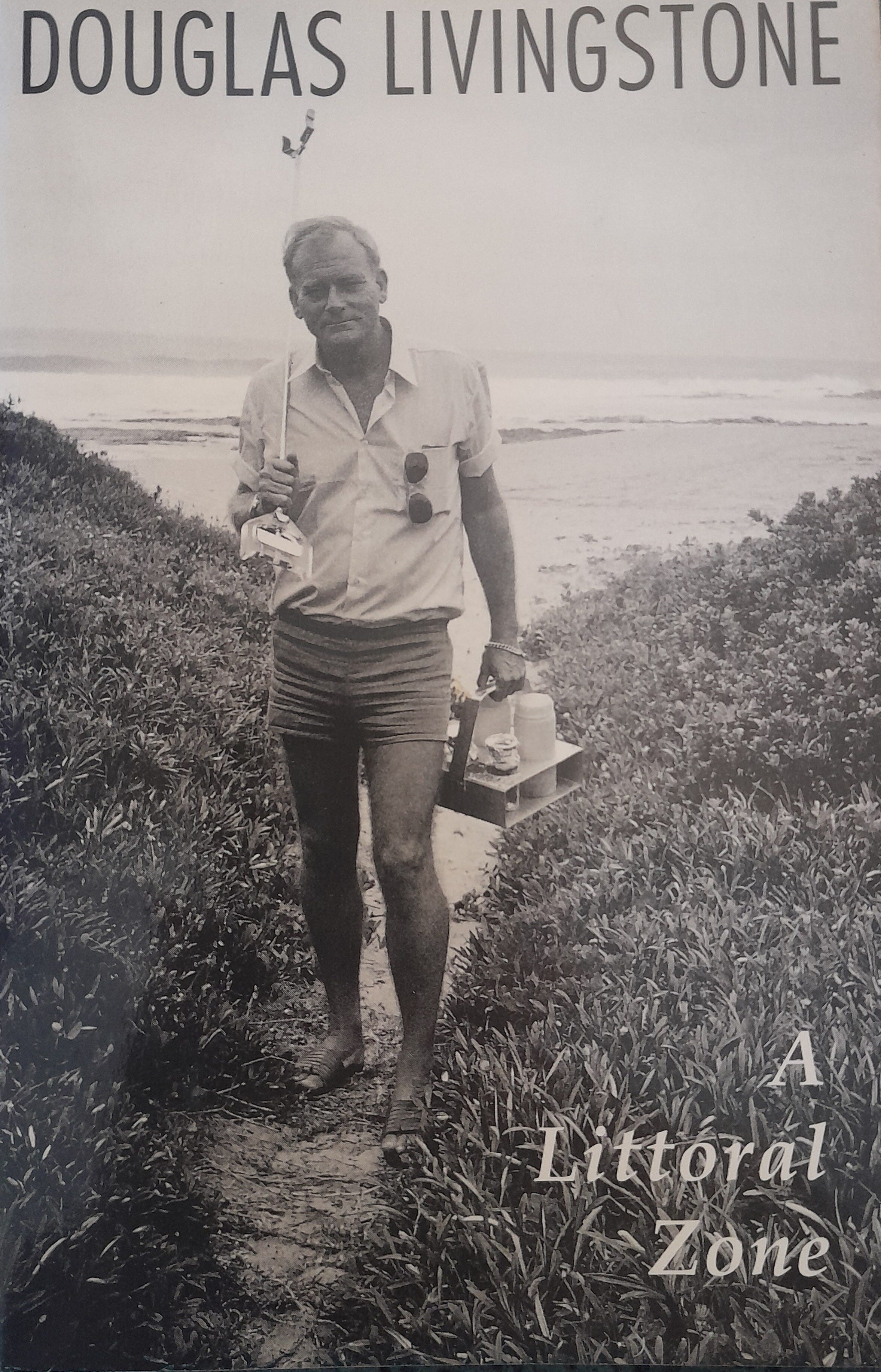
1. The poet Douglas Livingstone (1932-1996) had a way of getting to the nub of things. Here he is in that Izwi 14 of many decades back (February 1974) on what happens when you start and finish a poem or, for that matter, a novel. “There is no finer poem in the world than the one you’ve just completed. Six weeks later that same poem is the most godawful thing you’ve ever read. So you throw it away: or go at it again, or put it away to see what it will be like in a year. Don’t get me wrong: I am not knocking or excluding inspiration. Inspiration is all there at the beginning: the initiator of the whole process disguised in overalls, clambering about and within the whole, and probably present, heavily masked inside the skeletal structure during the ensuing constructional procedures: the hammering of the work into a finished artefact. […] By the time the thing is in print, one is usually ashamed of it, disappointed, outraged even. The creative tides (for that particular work) have ebbed completely, leaving the dank pools, muddy miasma and mouldering vegetation of the critical flats.” Ag, shame, hey!
2. I came across this wisdom in Ellen Bryant Voigt’s The Art of Syntax. She quotes the poet, Stanley Kunitz expounding on rhythm in poetry but his assessment applies to prose too: “You cannot write a poem until you hit upon its rhythm. That rhythm not only belongs to the subject matter, it belongs to your interior world, and the moment they hook up there’s a quantum leap of energy. You can ride on that rhythm, it will carry you somewhere strange.” Okay, some of this is a bit “out there” but I take his point about the rhythm of the sentence and that there is no telling where it will end up.
3. Jan Harayda has a Substack called Letter from a Reader. She’s got a quirky way of seeing the world and recently wrote about Joshua Blackburn’s The Language-Lover’s Lexipedia: An A-Z of Linguistic Curiosities: “In the Kindle sample, I liked the Bible Versions entry that has verses from Genesis 1:8 taken from different published versions of the Bible, including the SMS Bible, the Emoji Bible, and the Pirate Bible. The Gen Z Bible renders Genesis 1:3 as: Then God was like, ‘Yo, let there be light,’ and boom, there was light.”
4. Good advice from much acclaimed UK book publicist, Alison Barrow: “I’d say if you can, be open to saying yes to all you are able to early on in a campaign - even before publication. Some of the most successful writers I work with will attest to my advocating the benefit of visiting bookshops, dropping off early copies, being willing to do podcasts, blogs, or local press - all these can snowball into bigger opportunities! Media and festivals often look at how much an author engages and how well they perform. Not everyone can travel, I know. So think about shaping up a written piece about your book - something that speaks to the themes therein for potential placement. […]Anything which showcases this ‘story outside of the story’ whether fiction or non-fiction.”
5. Christopher Hope gets the (almost) last word with his Substack, Cafe Complicity: “South Africa is a problem for writers because so often it effortlessly out-writes them. Consider, as I do whenever I drop into Obz Café, a legendary watering hole in Cape Town, the case of the weeping waitress. She is not much heard of today and her place in the history of the café goes unremarked. That’s a pity because what happened to her illustrates how hard it is to get a fix on what passes for ‘real’ in South Africa, either then or now. The very name of the country begs a raft of questions: whose South Africa is it anyway? What does it mean to say you belong? And exactly who is asking the question?” Read on…
6. RIP Tom Stoppard (1937-2025) “I write plays because dialogue is the most respectable way of contradicting myself.”
“I write plays because dialogue is the most respectable way of contradicting myself.”
What a great quote. And good publicity advice too.