
When social media works
Laying down the narrative line

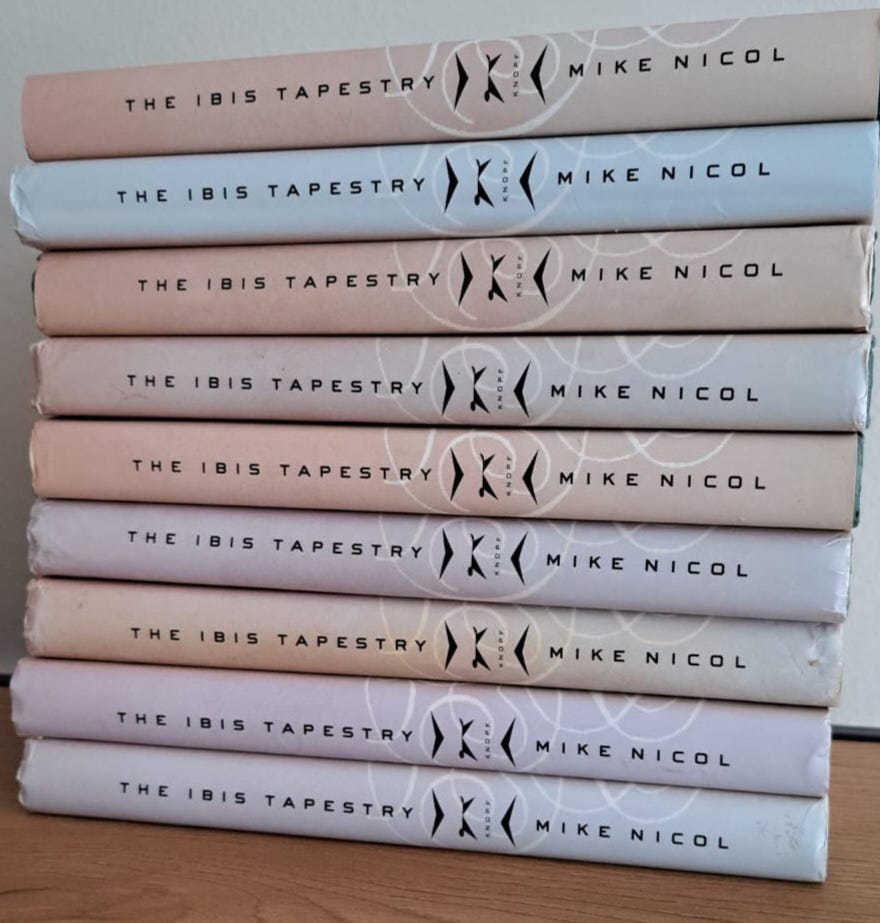
A few months ago, I heard from Prof Michael Titlestad that he was planning to teach my novel The Ibis Tapestry as part of the SA literature course at Wits university. “It remains one of the novels that has preoccupied me for decades,” he said. The novel was published in 1998 and has long been out of print, although Knopf still hold a small stock. Michael wanted to source 15 hardbacks which he could loan to students each year. His post on Facebook asking for copies got him responses from New York to Grabouw, and he soon had nine books. “At least 50 people contacted me with suggestions of where to source copies. It felt as if readers were truly mobilised.” In a way, The Ibis Tapestry was the start of my life in crime (fiction), so I’ve long been grateful for the direction it took.
If you’ve ever been puzzled by the difference between suspense fiction and crime fiction – what the Americans call mysteries – here’s crime novelist Jaime Jo Wright’s explanation: “I think suspense is a more universal term for anything that includes death, murder, action, fear, and adventure. But let’s not underestimate these fundamental differences in a story. While a suspense novel and a mystery novel may both sport a murder victim, in suspense, more likely than not, the scene will take the reader catapulting through the situation, riddle them with horror, and often include car chases, running, gun fire, and or the deeply intense forensic investigative scenes as found in a lot of law enforcement thrillers. In a mystery, the scene will often take a slower pace, small details hinting toward larger clues that become big pieces to an overarching puzzle. Questions of motives, suspects, and unknown dangers lurk around the corners. It can even take a more literary approach in tone as well, sometimes being prone to longer and more psychological descriptions.”
The Wednesday quote from Joan Didion in The White Album: “We live entirely, especially if we are writers, by the imposition of a narrative line upon disparate images, by the ‘ideas’ with which we have learned to freeze the shifting phantasmagoria which is our actual experience.”
A writing tip from Imraan Coovadia (The Poisoners): “Our society is corrupted from the ground up: the poor, the rich, black, white, powerful, and the powerless, left-wing and right, lawyers and trade unionists. We lie and accept lies as a people more easily than probably any other people on Earth. Ultimately, this acceptance of lying is a matter of opinion. Over time, I think, the best way to treat opinion is through writing and argument, setting an example of seeking truth.”
RIP Jeremy Gordin. From Kevin Ritchie’s obit in Daily Maverick: “Jeremy Gordin was a writer’s writer, a journalist’s journalist and an all-round mensch, in every sense of the word. He was someone who would find a bird on the ground with a broken wing, pick it up, painstakingly nurse it back to health and then help it to fly off – as he did for me.” There was a short time in the 1990s when Jeremy also edited the literary magazine, New Contrast.
So, I have googled phantasmagoria. A powerful word. Typical Joan Didion.
I’ve been so saddened by Jeremy Gordin’s murder. That such a full life could come to such an senseless end.